

What Is BYU Football?
BYU football represents the intercollegiate football program of Brigham Young University, located in Provo, Utah. The team, known as the BYU Cougars, has built a national reputation for competitive success, disciplined play, and strong quarterback development.
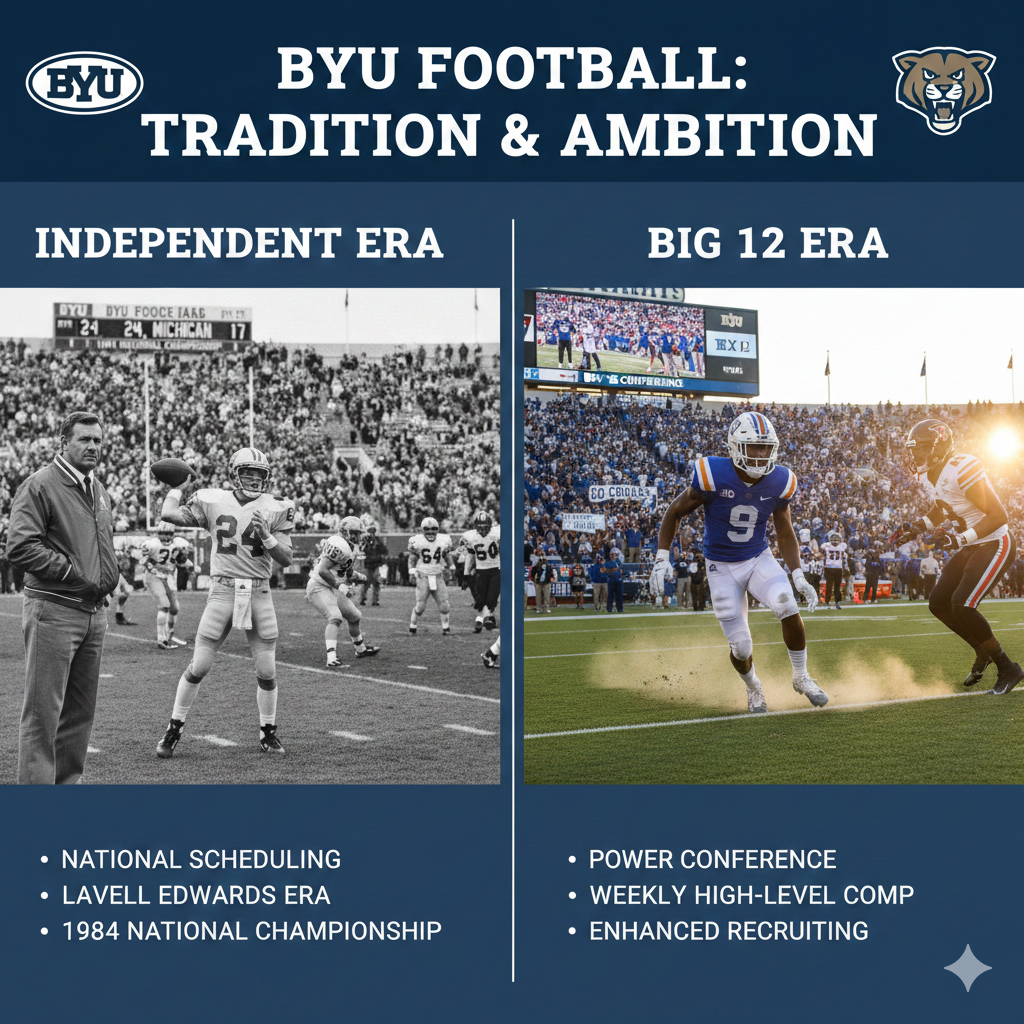
For decades, BYU football stood apart from most college programs due to its long-term independence, national scheduling, and institutional mission. That identity helped shape one of the most recognizable brands in college football. Today, BYU football competes in the Big 12 Conference, marking a significant evolution in the program’s history.
At its core, BYU football blends tradition with ambition. The program emphasizes player development, strong team culture, and strategic adaptability while competing against the highest level of collegiate football.
BYU Football History: From Humble Beginnings to National Respect
Early Years and Program Formation
t began in the early 20th century as a regional program with modest expectations. In its formative decades, the team competed primarily against regional opponents, building the foundation for future success.
Key characteristics of early BYU football included
- Emphasis on discipline and fundamentals
- Strong ties to university values
- Gradual growth through regional competition
These early years were about survival and identity, not national relevance. That would change dramatically in the latter half of the century.
The LaVell Edwards Era: A Program Transformed
No discussion of its history is complete without LaVell Edwards. His arrival as head coach marked a turning point that transformed BYU into a national powerhouse.
Under Edwards, it became known for:
- Innovative passing offenses
- Elite quarterback development
- National scheduling and exposure
The pinnacle of this era came with the 1984 national championship, when BYU finished undefeated and claimed college football’s ultimate prize. That season permanently elevated BYU football’s national standing.
Post-Championship Stability and Independence
Following the championship era, it remained competitive for decades. While conference realignment reshaped college football, BYU chose independence, scheduling nationally and maintaining flexibility.
Key benefits of independence included:
- National recruiting visibility
- Unique scheduling freedom
- Brand recognition across regions
However, independence also brought challenges, particularly in the strength of schedule consistency and postseason access.
BYU Football’s Identity as an Independent Program
Advantages of Independence
For many years, it thrived outside traditional conference structures. Independence allowed the program to:
- Schedule games coast to coast
- Maintain national relevance
- Control media and exposure strategies
This approach helped BYU remain visible and competitive even as conference consolidation reshaped college football.
Limitations and Competitive Challenges
Despite its benefits, independence created obstacles:
- Difficulty securing elite bowl placements
- Inconsistent late-season competition
- Recruiting disadvantages compared to Power Conference teams
These challenges eventually contributed to BYU’s pursuit of conference membership.
The Transition to the Big 12 Conference
Why the Big 12 Matters for BYU Football
Joining the Big 12 marked the most significant structural change in its history since independence. The move instantly placed BYU in a Power Conference environment.
Key impacts include:
- Weekly high-level competition
- Increased national exposure
- Enhanced recruiting credibility
It is no longer judged as an outsider but as a full participant in one of college football’s premier conferences.
Adjusting to Big 12 Football
Big 12 football emphasizes:
- Physical line play
- Depth across the roster
- Week-to-week competitive intensity
BYU has responded by focusing on roster depth, strength development, and defensive adaptability.
BYU Football Performance: Past vs Present
Program Evolution Comparison
| Category | Independent Era | Big 12 Era |
|---|---|---|
| Scheduling | National, varied | Conference-focused |
| Competition Level | Inconsistent | High weekly |
| Recruiting Reach | Moderate national | Expanded Power Conference |
| Postseason Access | Limited | Structured |
| Brand Visibility | Strong niche | Mainstream Power Five |
This comparison highlights how it has transitioned from uniqueness to structural competitiveness.
BYU Football Recruiting Strategy
Traditional Recruiting Foundations
Historically, BYU football recruiting emphasized:
- Player development over star ratings
- Strong cultural fit
- Long-term growth
Many BYU players developed into elite performers despite modest recruiting rankings.
Modern Recruiting in the Big 12
The Big 12 era has expanded it recruiting in several ways:
- Increased exposure to top-tier prospects
- Greater appeal to transfers
- Enhanced NIL opportunities
BYU now recruits with the credibility of a Power Conference program while maintaining its developmental strengths.
Key Recruiting Focus Areas
- Offensive line depth
- Defensive speed
- Quarterback leadership
- Player versatility
Recruiting has become more competitive, but BYU football’s identity remains a differentiator.
BYU Football Schedule: Then and Now
Independent Scheduling Model
As an independent, it schedules were
- Nationally diverse
- Front-loaded with marquee games
- Variable in difficulty
This created excitement but also unpredictability.
Big 12 Scheduling Structure
Big 12 schedules offer:
- Consistent competition level
- Traditional rivalries
- Clear postseason pathways
For fans and players alike, the structure adds clarity and purpose to each season.
Offensive and Defensive Philosophy
BYU Football Offense
Historically known for passing excellence, it continues to emphasize
- Quarterback efficiency
- Balanced play-calling
- Situational awareness
While the system has evolved, the emphasis on smart offensive football remains intact.
BYU Football Defense
Modern BYU defenses focus on:
- Physicality at the line of scrimmage
- Speed in space
- Adaptability against spread offenses
Defensive development has become a key priority in Big 12 play.
Player Development and Quarterback Legacy
A Tradition of Elite Quarterbacks
It has produced numerous standout quarterbacks, shaping its national reputation.
Common traits among BYU quarterbacks include:
- Strong decision-making
- High football IQ
- Leadership
This legacy continues to influence recruiting and player development.
BYU Football Culture and Fan Base
What Makes BYU Football Unique
Its culture emphasizes:
- Team-first mentality
- Discipline and preparation
- Strong alumni and fan support
Home games in Provo create a distinctive environment that energizes players and fans alike.
National Fan Presence
Due to its long independence and national scheduling, it maintains a widespread fan base across the country.
The Future of BYU Football
Short-Term Outlook
In the near future, it aims to:
- Achieve consistent bowl eligibility in the Big 12
- Compete for upper-tier conference finishes
- Strengthen recruiting pipelines
Long-Term Vision
Long-term goals include:
- Becoming a perennial Big 12 contender
- Competing for conference championships
- Maintaining national relevance
With institutional support and conference stability, BYU football’s future appears promising.
Frequently Asked Questions About BYU Football
What is BYU football best known for?
It is best known for its 1984 national championship, innovative offenses, quarterback development, and long-term independence before joining the Big 12.
How has BYU football performed in the Big 12?
It has shown competitiveness while adjusting to the physical and depth demands of Big 12 play. The program is in a growth phase with upward momentum.
Why did BYU football join the Big 12?
Joining the Big 12 provided consistent high-level competition, improved recruiting opportunities, and a clearer postseason pathway.
How does BYU football recruit compared to other Big 12 teams?
It combines Power Conference recruiting access with a strong emphasis on development, culture, and long-term player growth.
What is the future outlook for BYU football?
The future outlook is positive, with expectations of sustained competitiveness, recruiting growth, and national relevance within the Big 12.
Conclusion: Why BYU Football Still Matters
BYU football is a program defined by adaptability, resilience, and tradition. From its early beginnings to national championship glory, from more independence to Big 12 competition, the Cougars have continually evolved while preserving their identity.
Today, It stands at the intersection of tradition and opportunity. Competing in the Big 12 has raised expectations, sharpened focus, and expanded the program’s ceiling. With a loyal fan base, strong leadership, and a clear vision, it is positioned not just to participate but to compete meaningfully on college football’s biggest stages.
