

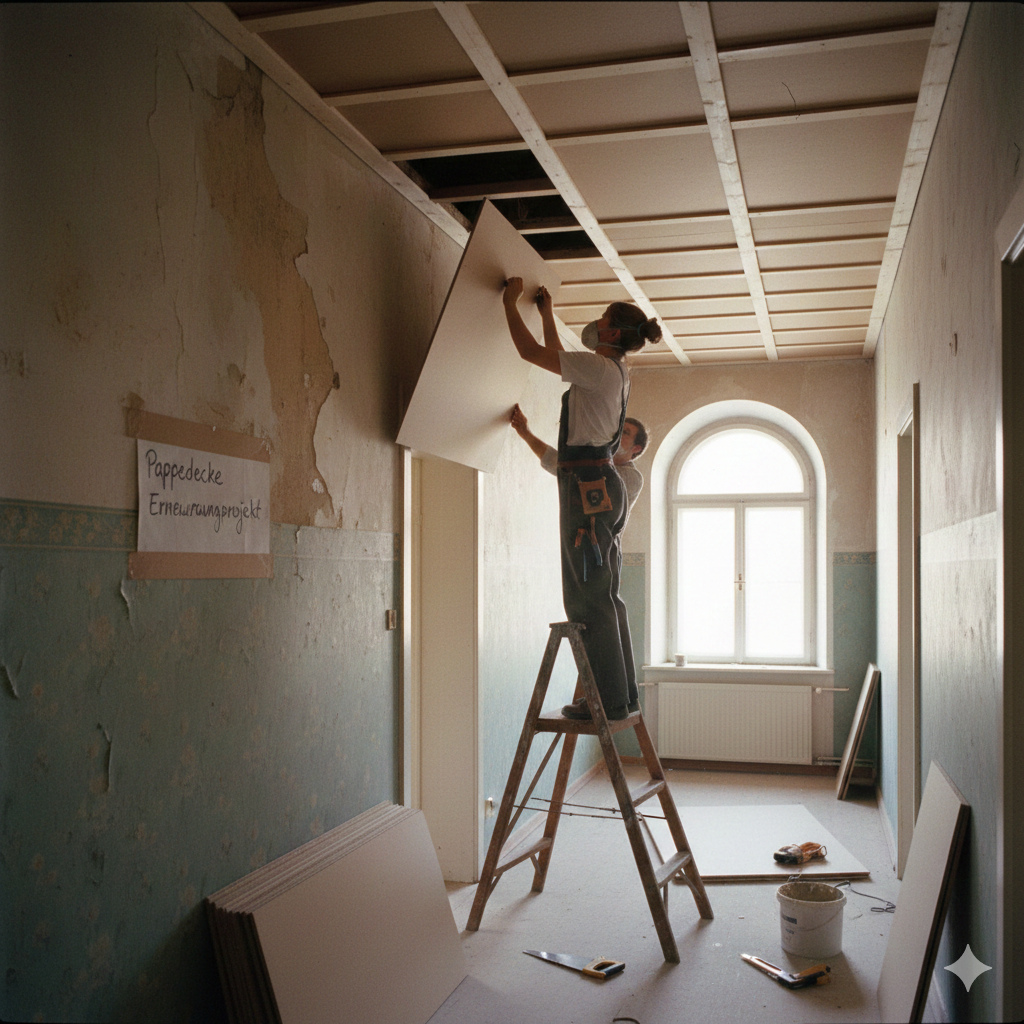
What Is a Pappedecke?
A pappedecke is an interior ceiling made from pressed cardboard or fiberboard panels. The term originates from German, where “Pappe” refers to cardboard and “Decke” means ceiling. Therefore, the name itself clearly describes both the material and the function.
Historically, pappedecke ceilings became popular when fast and affordable construction was essential. As a result, they were widely installed in residential buildings, particularly in older European homes. Even though modern materials are now available, pappedecke continues to appear in renovation projects where cost efficiency remains a priority.
Most importantly, a pappedecke does not serve a structural role. Instead, it functions as a finishing ceiling layer that improves appearance while keeping expenses low.
Pappdecke Bedeutung Explained
To understand the pappdecke meaning clearly, it helps to break the concept down step by step.
First, a Pappdecke is made primarily from cardboard-based materials. Next, it acts as a lightweight alternative to heavier ceiling systems such as plaster or concrete. Finally, it is designed to improve interior appearance rather than to support loads.
In other words, pappedecke refers to a simple and practical ceiling solution used when affordability and ease of installation are more important than long-term durability.
Pappedecke Material Overview
Materials Used in Pappedecke
Pappedecke material is usually produced from the following components:
- Pressed cardboard sheets
- Fiberboard or hardboard panels
- Recycled paper fibers bonded with adhesives
Because these materials are lightweight, the panels are easy to transport and handle. Consequently, installation can often be completed without professional tools.
Material Characteristics
- Lightweight and flexible
- Smooth or lightly textured surface
- Can be painted or wallpapered
- Sensitive to moisture
However, due to their composition, these panels perform best only in dry indoor environments.
Common Uses of Pappedecke Ceilings
Pappedecke ceilings are typically chosen for practical reasons. Therefore, they are most often found in situations where simplicity and cost control are important.
Typical Applications
- Older residential buildings
- Rental apartments
- Basements and storage rooms
- Temporary constructions
- DIY renovation projects
- Hallways and secondary living spaces
Although pappedecke is rarely used in modern luxury interiors, it still fulfills a functional role in many properties.
Pappedecke Vorteile (Advantages)
Key Benefits
It offers several advantages that explain its continued use. First and foremost, it is very affordable. Additionally, it is easy to install, even for beginners.
The main benefits include:
- Low material cost
- Quick installation process
- Lightweight construction
- Easy replacement when damaged
- High suitability for DIY projects
Benefits for Homeowners
As a result of these advantages, homeowners often select pappedecke for budget renovations. Moreover, it can help cover minor imperfections in the original ceiling surface.
Disadvantages of Pappedecke
Despite its benefits, it also has clear limitations. Therefore, understanding its disadvantages is essential before making a decision.
Main Drawbacks
- Poor moisture resistance
- Limited sound insulation
- Lower durability than drywall or plaster
- Minimal fire resistance unless treated
- Can appear outdated without proper finishing
Because of these weaknesses, pappedecke should not be used in kitchens, bathrooms, or humid areas.
Pappedecke Decke Compared to Other Ceiling Types
Comparison Table
| Feature | Pappedecke | Drywall Ceiling | Plaster Ceiling | Suspended Ceiling |
|---|---|---|---|---|
| Cost | Very low | Medium | High | Medium |
| Installation | Easy | Moderate | Complex | Moderate |
| Weight | Very light | Light | Heavy | Light |
| Moisture Resistance | Low | Medium | Medium | Medium |
| Durability | Low | High | Very high | Medium |
| DIY Friendly | Yes | Yes | No | Yes |
| Visual Style | Basic | Modern | Classic | Functional |
In comparison, pappedecke prioritizes affordability and simplicity rather than long-term performance.
Pappedecke Installation Guide
Tools and Materials Needed
Before starting, prepare the following items:
- Pappedecke panels
- Wooden battens or ceiling framework
- Measuring tape and pencil
- Hand saw or utility knife
- Hammer or screwdriver
- Nails or screws
Step 1: Ceiling Preparation
First, ensure that the existing ceiling surface is dry, clean, and stable. After that, remove any loose materials and take accurate measurements.
Step 2: Framework Installation
Next, install wooden battens across the ceiling. At this stage, make sure the spacing is even and the framework is level, as this directly affects the final result.
Step 3: Panel Cutting
Then, measure and cut the pappedecke panels to size. Meanwhile, allow small expansion gaps to prevent cracking later.
Step 4: Panel Attachment
After cutting, fix the panels to the framework using nails or screws. However, avoid overtightening, since the material can be damaged easily.
Step 5: Surface Finishing
Finally, fill joints if necessary, sand lightly, and apply paint or wallpaper. As a result, the ceiling will appear clean and uniform.
Cost Guide for Pappedecke
Cost Factors
Several factors influence the total cost:
- Panel thickness and quality
- Size of the room
- Supporting materials
- Finishing preferences
Overall Cost Expectations
Generally, it is one of the most affordable ceiling options available. Furthermore, DIY installation can significantly reduce overall expenses.
Is it the right choice?
When it Is Suitable
Pappedecke is a good choice when:
- Budget limitations exist
- Quick installation is required
- The space is dry and low-risk
- DIY work is preferred
When to Consider Alternatives
On the other hand, alternative ceiling systems are better when:
- Moisture levels are high
- Fire safety regulations are strict
- A modern design is required
Therefore, evaluating the room conditions is essential before choosing.
Maintenance and Lifespan
Expected Lifespan
Under proper dry conditions, a pappedecke can last for many years. However, moisture exposure can significantly shorten its lifespan.
Maintenance Tips
- Keep the ceiling dry
- Repaint when signs of wear appear
- Replace damaged panels quickly
As a result, regular care helps maintain functionality.
What is pappedecke?
It is a ceiling made from pressed cardboard or fiberboard panels used for interior finishing.
What does pappdecke mean?
Pappdecke means cardboard ceiling and describes a lightweight, non-structural ceiling solution.
Is it still used today?
Yes, it is still used in older buildings and cost-focused renovations.
Is it suitable for DIY installation?
Yes, because installation is simple, it is ideal for beginners.
Can pappedecke be painted?
Yes, it can be painted or wallpapered after installation.
Is it fire-resistant?
Standard pappedecke is not fire-resistant unless treated.
Conclusion
Pappedecke remains a practical and budget-friendly ceiling solution, especially for dry interior spaces and renovation projects with limited budgets. Although it lacks the durability and moisture resistance of modern systems, it offers ease of installation and affordability. Therefore, when chosen for the right environment, it continues to provide functional and visual value for homeowners, DIY learners, and renovation planners.
