

Introduction
Communication skills are one of the most essential abilities in both personal and professional life. Whether you are a student, job seeker, professional, or freelancer, your success largely depends on how well you communicate with others.
In simple words, communication skills refer to your ability to convey information clearly, effectively, and confidently. It includes not only speaking but also listening, writing, and understanding others.
In today’s competitive world, having strong communication skills can open doors to better opportunities, strong relationships, and career growth.
This complete guide will help you understand communication skills in depth, including their importance, types, examples, and practical steps to improve them.
What Are Communication Skills?
Communication skills are the abilities that help you share your thoughts, ideas, and information with others effectively.
These skills include:
- Speaking clearly
- Listening actively
- Writing effectively
- Understanding body language
- Responding appropriately
Simple Definition
Communication skills are the ability to send and receive messages in a way that is clear, accurate, and meaningful.
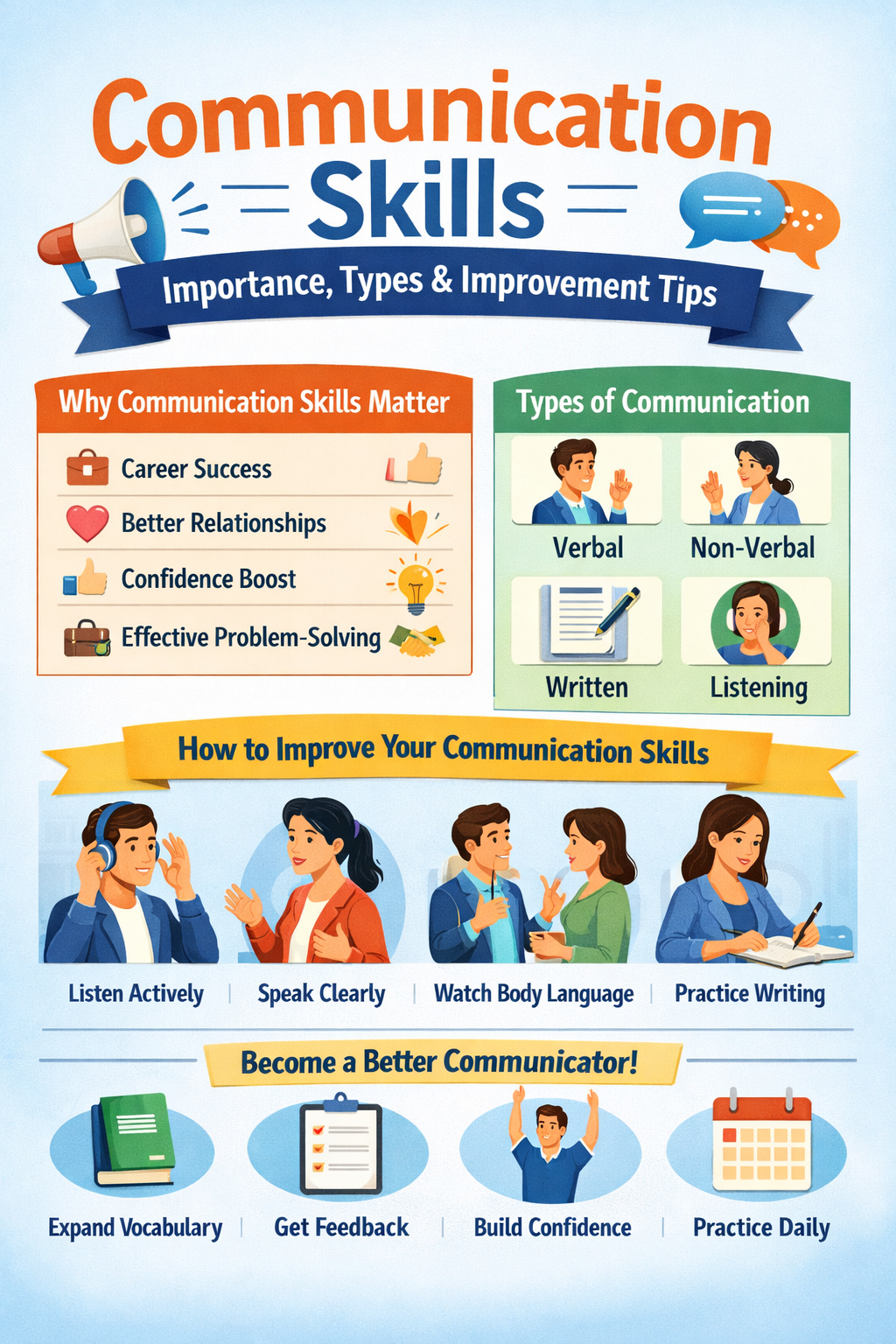
Importance of Communication Skills
Is play a vital role in every area of life. Without effective communication, misunderstandings, conflicts, and missed opportunities can occur.
Why Communication Skills Matter
1. Career Growth
Good communication helps you:
- Perform better in interviews
- Build strong workplace relationships
- Present ideas confidently
2. Better Relationships
Clear communication builds:
- Trust
- Understanding
- Emotional connection
3. Increased Confidence
When you communicate effectively, you feel more confident expressing your ideas.
4. Problem-Solving Ability
Good communication helps you:
- Explain problems clearly
- Understand solutions
- Work better in teams
5. Leadership Skills
Strong communicators often become better leaders because they can:
- Motivate others
- Give clear instructions
- Resolve conflicts
Types of Communication Skills
Communication is not just about speaking. It includes multiple forms that work together.
1. Verbal Communication
Verbal communication means using words to communicate.
Examples:
- Conversations
- Presentations
- Meetings
- Phone calls
Key Elements:
- Tone of voice
- Clarity
- Confidence
2. Non-Verbal Communication
Non-verbal communication includes body language and facial expressions.
Examples:
- Eye contact
- Gestures
- Posture
- Facial expressions
Why It Matters:
Sometimes body language speaks louder than words.
3. Written Communication
Written communication involves conveying messages through text.
Examples:
- Emails
- Reports
- Messages
- Social media posts
Important Skills:
- Grammar
- Clarity
- Structure
4. Listening Skills
Listening is one of the most important communication skills.
Active Listening Includes:
- Paying full attention
- Not interrupting
- Asking questions
- Giving feedback
5. Visual Communication
Visual communication uses images and visuals to convey information.
Examples:
- Charts
- Graphs
- Infographics
- Slides
Types of Communication Skills Comparison Table
| Type of Communication | Description | Example | Importance |
|---|---|---|---|
| Verbal | Spoken words | Meetings | Clarity and expression |
| Non-Verbal | Body language | Eye contact | Builds trust |
| Written | Text-based | Emails | Professional communication |
| Listening | Understanding others | Conversations | Reduces misunderstandings |
| Visual | Images and graphics | Presentations | Better understanding |
Communication Skills Examples
Understanding examples can help you apply these skills in real life.
Example 1: Job Interview
- Speaking clearly
- Listening carefully to questions
- Maintaining eye contact
Example 2: Team Meeting
- Sharing ideas confidently
- Respecting others’ opinions
- Giving constructive feedback
3: Freelancing
- Writing clear messages to clients
- Understanding project requirements
- Providing updates professionally
4: Classroom
- Asking questions
- Participating in discussions
- Taking notes effectively
Key Elements of Effective Communication Skills
To communicate effectively, you need to focus on certain key elements.
1. Clarity
Your message should be easy to understand.
2. Confidence
Speak with confidence but not arrogance.
3. Active Listening
Always listen before responding.
4. Empathy
Understand others’ feelings and perspectives.
5. Respect
Respect different opinions and ideas.
Barriers to Effective Communication
Sometimes communication fails due to certain obstacles.
Common Barriers
1. Language Differences
Different languages can create misunderstandings.
2. Lack of Attention
Not listening properly leads to confusion.
3. Emotional Barriers
Anger or stress affects communication.
4. Cultural Differences
Different cultures have different communication styles.
5. Poor Body Language
Negative gestures can send wrong signals.
How to Improve Communication Skills
Improving it takes practice and consistency.
Step-by-Step Guide
Step 1: Become a Good Listener
- Focus on the speaker
- Avoid interrupting
- Ask questions
2: Practice Speaking Clearly
- Use simple words
- Avoid unnecessary jargon
- Speak at a steady pace
3: Improve Body Language
- Maintain eye contact
- Use positive gestures
- Keep a confident posture
4: Expand Your Vocabulary
- Learn new words
- Read books and articles
- Practice daily
5: Work on Confidence
- Practice speaking in front of a mirror
- Join discussions
- Record yourself speaking
6: Get Feedback
- Ask others for feedback
- Identify your mistakes
- Improve continuously
7: Practice Writing Skills
- Write daily
- Check grammar
- Keep your writing clear and simple
Daily Habits to Improve Communication Skills
Building habits is the key to improvement.
Useful Daily Practices
- Read for 15–20 minutes daily
- Practice speaking in English or your target language
- Watch interviews or speeches
- Write short paragraphs daily
- Listen to podcasts
- Observe good communicators
Communication Skills for Different Audiences
1. Students
Students should focus on:
- Classroom participation
- Asking questions
- Presentation skills
2. Job Seekers
Important skills include:
- Interview communication
- Resume writing
- Professional speaking
3. Professionals
Professionals need:
- Team communication
- Email writing
- Leadership communication
4. Freelancers
Freelancers should improve:
- Client communication
- Proposal writing
- Negotiation skills
Communication Skills in the Workplace
Communication plays a key role in workplace success.
Benefits in Workplace
- Better teamwork
- Clear instructions
- Reduced conflicts
- Increased productivity
Tips for Workplace Communication
- Be clear and concise
- Listen to colleagues
- Use professional language
- Avoid misunderstandings
Verbal vs Non-Verbal Communication
| Feature | Verbal Communication | Non-Verbal Communication |
|---|---|---|
| Method | Words | Body language |
| Example | Talking | Facial expressions |
| Importance | Clear messaging | Emotional connection |
| Control | High | Sometimes unconscious |
Common Communication Mistakes to Avoid
Avoiding mistakes is as important as learning skills.
Mistakes to Watch Out For
- Interrupting others
- Speaking too fast
- Using complicated words
- Ignoring body language
- Not listening properly
- Being unclear or vague
Tools and Techniques to Enhance Communication
Useful Techniques
- Practice storytelling
- Use simple language
- Pause before speaking
- Ask open-ended questions
- Summarize conversations
Role of Communication Skills in Success
It directly impact success in life.
How They Help
- Build strong networks
- Improve leadership abilities
- Increase job opportunities
- Enhance personal relationships
FAQs
1. What are communication skills?
They are the abilities used to share information effectively through speaking, writing, listening, and body language.
2. Why are communication skills important?
They help in building relationships, improving career opportunities, and avoiding misunderstandings.
3. How can I improve my communication skills?
You can improve by practicing speaking, listening actively, reading, writing, and getting feedback.
4. What are the types of communication skills?
Main types include verbal, non-verbal, written, listening, and visual communication.
5. What are examples of communication skills?
Examples include public speaking, active listening, writing emails, giving presentations, and understanding body language.
Conclusion
Communication skills are essential for success in every aspect of life. Whether you are a student, job seeker, professional, or freelancer, improving your communication can significantly impact your growth.
By understanding the types of communication, practicing regularly, and avoiding common mistakes, you can become a confident and effective communicator.
Remember, communication is not just about speaking—it is about understanding, connecting, and delivering your message clearly.
