

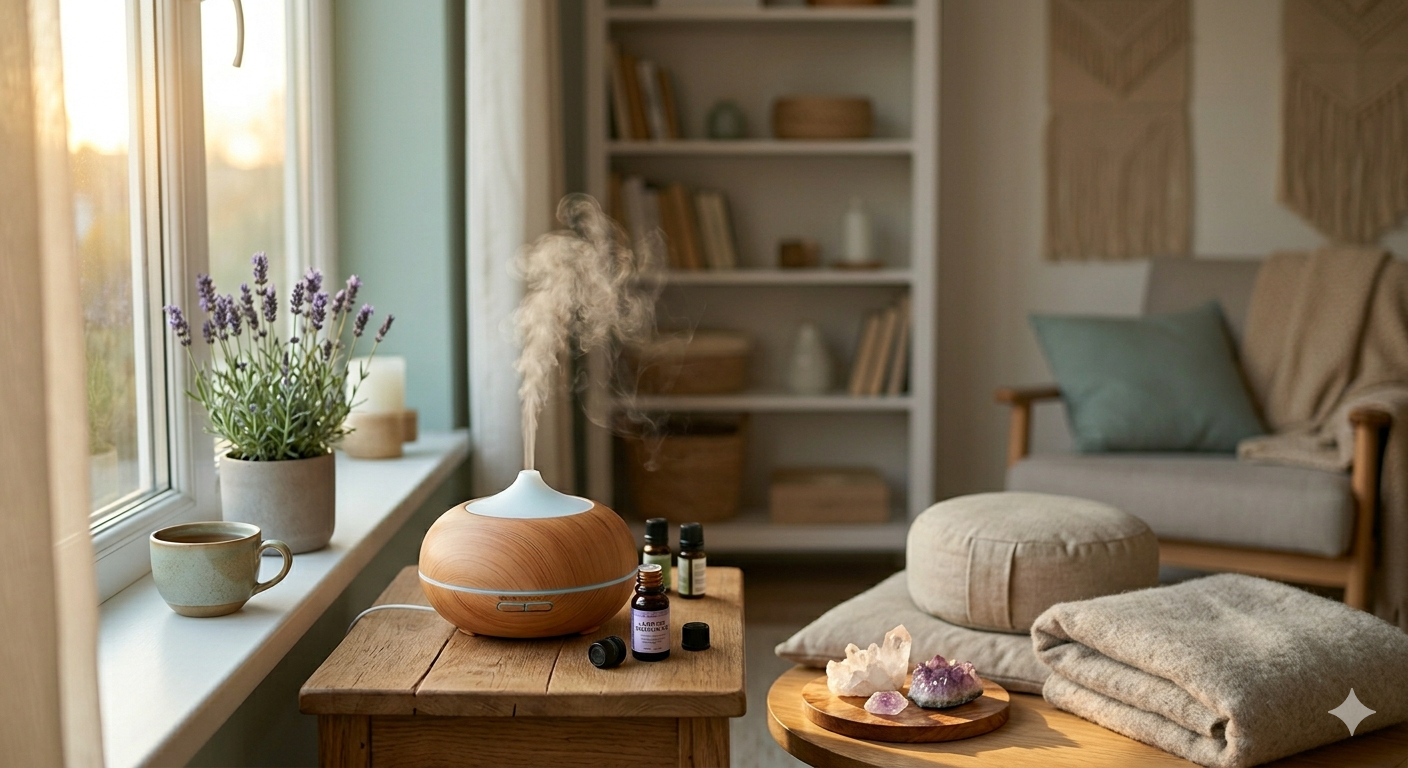
Every single day, millions of people wake up already exhausted. Before the first cup of tea, the mind is already racing — work deadlines, unread messages, unresolved conversations, financial stress, relationship tension. The body is present, but peace feels distant.
This is where essential oils enter the picture—not as magic, not as a replacement for professional care, but as one of the most accessible, evidence-supported tools for resetting the nervous system and restoring a sense of inner quiet.
By the end, you will know exactly which oils support peace of mind, how they work in the body, how to use them correctly, and how to build a simple daily ritual that actually sticks.
What Are Essential Oils and Why Do They Affect the Mind
Each oil contains the chemical compounds naturally present in the plant — terpenes, esters, aldehydes, ketones — all of which have specific physiological effects when inhaled or absorbed through the skin.
When you inhale an essential oil, the scent molecules travel through the nasal passages and reach the olfactory receptors. These receptors send signals directly to the limbic system — the oldest part of the brain responsible for emotion regulation, memory formation, and the fight-or-flight stress response.
This is not metaphorical. The limbic system includes the amygdala, which processes fear and anxiety, and the hippocampus, which manages memory and emotional context.
The Science Behind Aromatherapy and Stress Relief
Several peer-reviewed studies have examined the relationship between essential oils and stress response markers. The findings are consistent enough to take seriously.
Lavender oil has been studied more than any other essential oil for anxiety and stress. Multiple clinical trials have shown that inhaling lavender reduces salivary cortisol levels, lowers heart rate, and produces measurable changes in brain activity associated with calm and reduced arousal. One widely cited study found that lavender aromatherapy before stressful medical procedures significantly reduced patient anxiety compared to a control group.
The Best Essential Oils for Peace of Min
Not all essential oils are calming. Some are stimulating, some are clarifying, some are grounding.
Lavender (Lavandula angustifolia)
Lavender is the most versatile and widely researched calming essential oil. Its primary active compounds — linalool and linalyl acetate — have sedative and anxiolytic effects. Lavender works for general anxiety, racing thoughts at bedtime, tension after difficult days, and emotional overwhelm. It is the best starting point for anyone new to essential oils for mental wellness.
Frankincense (Boswellia sacra)
Frankincense has a deep, warm, slightly resinous scent that immediately signals the nervous system to slow down. It is particularly effective during meditation, breathwork, or any practice requiring inner stillness. Beyond its neurological effects, frankincense has a grounding quality that connects the user to a sense of presence and stability rather than anxiety about the future.
Bergamot (Citrus bergamia)
Bergamot sits at an interesting intersection between uplifting and calming. It reduces anxiety without inducing drowsiness, making it ideal for daytime use — during work, before a stressful meeting, or when emotional tension needs to be released without loss of focus.
Ylang Ylang (Cananga odorata)
Ylang-ylang has a rich, floral scent that has been shown to lower blood pressure and heart rate — both physiological markers of stress. It works well in a blend with lavender or frankincense. Used alone, its scent can be strong, so small amounts are more effective.
Roman Chamomile (Anthemis nobilis)
Roman chamomile is gentler than its more common German counterpart and carries a soft, apple-like scent. It is especially effective for anxiety that manifests physically — tight chest, shallow breathing, digestive tension. It is also excellent for children and sensitive individuals. Roman chamomile supports the parasympathetic nervous system, the branch responsible for rest, repair, and calm.
H3: Cedarwood (Cedrus atlantica)
Cedarwood contains cedrol, a compound shown to have sedative effects on the central nervous system. It has an earthy, woody scent that feels grounding and stable.
H3: Vetiver (Vetiveria zizanoides)
Its scent is thick, earthy, and smoky — unlike anything else in the essential oil world. It is deeply grounding and particularly effective for individuals whose anxiety presents as hyperactivity, overthinking, or an inability to stay present. A single drop in a diffuser blend can anchor an entire room.
Essential oils for peace of mind
| Oil | Primary benefit | Best use method | Time of day |
|---|---|---|---|
| Lavender | General calm, sleep support | Diffuser, pillow spray, topical | Evening |
| Frankincense | Deep stillness, meditation | Diffuser, direct inhalation | Anytime |
| Bergamot | Daytime anxiety relief | Diffuser, personal inhaler | Morning / afternoon |
| Ylang ylang | Emotional release, heart calm | Diffuser, bath | Evening |
| Roman chamomile | Physical anxiety symptoms | Topical, bath | Anytime |
| Cedarwood | Restlessness, sleep | Diffuser, topical | Evening / night |
| Vetiver | Grounding, overthinking | Diffuser, topical | Evening / meditation |
How to Use Essential Oils for Peace of Mind
Knowing which oils to use is only half the equation. How you use them determines how effective they will be. There are four primary methods, each with different advantages.
Diffusion
Diffusing is the most common and accessible method. For peace of mind, run a diffuser for 30 to 60 minutes in the morning as part of a grounding ritual, or in the evening to transition from the stress of the day into a calmer state.
A simple starting blend for diffusion: 3 drops lavender, 2 drops frankincense, 1 drop cedarwood. This combination covers the three primary dimensions of calm — mental, emotional, and physical.
Topical Application
For emotional and mental calm, the most effective application points are the wrists, the base of the skull, behind the ears, and the sternum. The standard dilution ratio for adults is 2 to 3 percent — roughly 12 drops of essential oil per 30ml of carrier oil.
Personal Inhaler
A personal aromatherapy inhaler is a small tube containing an absorbent wick saturated with essential oil. This is one of the most practical methods for daytime use when a diffuser is not available.
Aromatherapy Bath
Adding essential oils to a warm bath creates a full sensory experience combining heat, inhalation, and skin absorption. Always dilute essential oils in a bath dispersant such as Epsom salts, whole milk, or a small amount of unscented body wash before adding to the water. Undiluted essential oils sitting on the surface of bathwater can cause skin irritation. A calming bath blend might include 5 drops lavender, 3 drops Roman chamomile, and 2 drops ylang ylang dispersed in two tablespoons of Epsom salts.
Building a Daily Essential Oil Ritual for Inner Peace
Consistency produces results. Using essential oils sporadically during moments of crisis is less effective than integrating them into a predictable daily routine. The following is a simple, sustainable framework.
Morning — Grounding Start Upon waking, before reaching for a phone or starting any task, spend three minutes with a calming or uplifting blend in a diffuser. Bergamot and frankincense work well in the morning — bergamot lifts mood without overstimulation, frankincense sets an intention of presence. This creates a neurological anchor — over time, the body begins to associate these scents with a calm, focused state.
Common Mistakes to Avoid
Using undiluted oils on skin. Essential oils are highly concentrated and can cause burns, sensitization, or allergic reactions when applied without a carrier oil. Always dilute.
Using too much. More oil does not mean more calm. Overloading a diffuser or applying excessive amounts topically can cause headache, nausea, or the opposite of the intended effect. Start with less than you think you need.
Expecting instant transformation. Essential oils work with the nervous system, which takes time to recalibrate. A consistent two-week practice will show more results than a single intense session.
Essential Oils and Mental Health — Important Boundaries
Essential oils are a complementary wellness tool. They are not a substitute for therapy, psychiatric medication, or professional support for serious mental health conditions. Anxiety disorders, depression, PTSD, and other clinical conditions require professional intervention.
That said, essential oils can meaningfully support the space around clinical treatment — helping someone feel slightly calmer before a therapy session, making the home environment more soothing during a difficult period, or supporting better sleep which in turn improves emotional regulation.
Use essential oils as one element of a wider commitment to mental wellness, not as a shortcut or replacement for the deeper work.
FAQs
Q: Which essential oil is best for instant calm?
Lavender is consistently the most reliable for rapid calming effect. Direct inhalation from a bottle or inhaler delivers results within minutes for most people. Bergamot is a close second, particularly for anxiety that feels more like tension than sadness.
Q: Can I use essential oils every day?
Yes. Daily use is actually more effective than occasional use because the body builds a conditioned response to the scent over time.
Q: Are essential oils safe during pregnancy?
Many essential oils are contraindicated during pregnancy, especially in the first trimester. Lavender and frankincense are generally considered lower risk but consulting a qualified aromatherapist or healthcare provider before use during pregnancy is strongly advised.
Q: How much essential oil should I add to a diffuser?
For a standard 100ml ultrasonic diffuser, 3 to 5 drops of essential oil is sufficient. Larger diffusers (300ml or more) can take 6 to 10 drops.
Q: Can essential oils help with sleep?
Yes. Lavender, cedarwood, vetiver, and Roman chamomile are among the most effective oils for sleep support.
Q: What is the difference between essential oils and fragrance oils?
Essential oils are natural extracts from plants with documented physiological effects. Fragrance oils are synthetic scent compounds designed to smell pleasant but with no therapeutic value.
Q: Do I need a diffuser, or can I just smell the bottle?
Direct inhalation from the bottle works and is a legitimate method called direct or dry inhalation. However, a diffuser disperses the oil more evenly over time and is more effective for sustained exposure.
Conclusion
Peace of mind is not a luxury. It is a baseline from which everything else in life functions better—relationships, work, health, creativity, decision-making. Essential oils will not solve the problems creating the stress, but they are one of the most accessible, natural, and well-supported tools for regulating the nervous system while those problems are being addressed.
Start simple. Choose one oil — lavender is the safest first choice. Use it consistently for two weeks, in a diffuser in the morning or evening. Notice what shifts. Then expand your practice as your confidence and curiosity grow.
